Web Development Trends for 2026
A
Admin
Content Writer
April 2, 2026•4 min read
Web Development
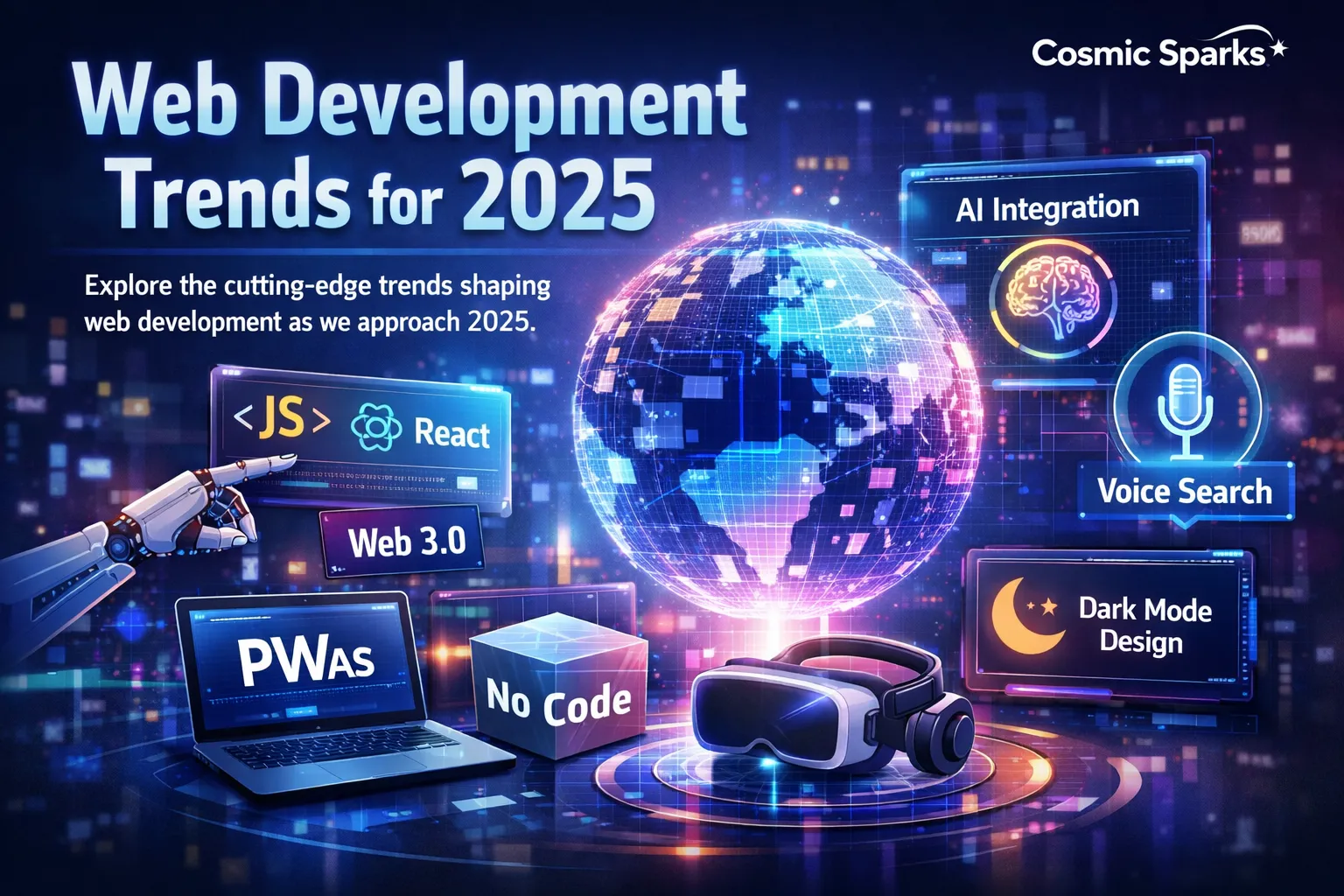
1. AI-Powered Development Becomes the New Normal
AI is no longer “just a tool” — it’s now your coding partner.
From generating components to testing and debugging, AI accelerates development cycles dramatically. Developers are increasingly relying on:
AI code assistants
AI documentation search
AI test generation
AI UI/UX helpers
Automatic bug detection
AI allows teams to ship faster, reduce errors, and cut costs, while solo founders can now build what previously required a full team.
2025 will not replace developers with AI — but developers using AI will replace developers who don’t.
2. Web3 and Decentralized Applications Grow Up
Web3 is moving from hype to real-world applications.
Key areas gaining momentum include:
decentralized identity (DID)
blockchain-based authentication
tokenized memberships
on-chain data storage
smart contract–based SaaS apps
Developers who learn Solidity, Rust, and Web3.js will unlock entirely new markets.
3. Progressive Web Apps (PWAs) Replace Mobile Apps
PWAs are becoming the default alternative to mobile apps.
They offer:
offline access
push notifications
home screen install
near-native speed
Businesses love PWAs because they eliminate:
app store fees
complex native builds
heavy downloads
Users love PWAs because they are faster, lighter, and privacy-friendly.
4. Low-Code & No-Code Go Mainstream
Low-code tools will not kill developers — instead, they will:
speed up MVP development
let founders validate faster
enable rapid prototyping
open tech to non-developers
Developers will shift from “writing code” to:
designing architectures
integrating APIs
building custom logic on top
Knowing how to combine code + no-code becomes a superpower in 2026.
5. AR/VR & 3D Web Experiences Explode
3D and immersive interfaces are leaving gaming and entering websites.
With WebXR and Three.js, we’re now seeing:
3D product viewers
virtual shopping
metaverse-style websites
immersive learning platforms
E-commerce brands especially use 3D to boost conversion rates and reduce product returns.
⚡ 6. Serverless and Edge Computing Dominate
Serverless platforms are removing infrastructure headaches.
In 2025, expect growth in:
AWS Lambda
Cloudflare Workers
Vercel Edge
Netlify Functions
Benefits:
auto-scaling
zero server maintenance
reduced latency
pay-only-for-usage
This is ideal for SaaS, APIs, and startups.
7. Voice & Conversational UI Become Standard
Typing is optional now.
Voice search and chatbot UI are becoming part of mainstream websites:
AI chatbots for support
voice navigation
speech-to-action interfaces
With mobile users dominating traffic, hands-free internet interaction matters more than ever.
8. Dark Mode by Default
Dark mode is no longer a design trend — it’s a user expectation.
It improves:
battery life
eye comfort
readability at night
Brands offering system-adaptive themes see higher engagement and session duration.
9. Cybersecurity & Privacy-First Development
More users online = more attacks.
2025 focuses strongly on:
zero-trust architecture
MFA & biometric authentication
encrypted data by default
secure API design
Developers must now think security-first, not “add security later”.
Final Thoughts
2025 is not just about learning new frameworks — it’s about embracing new ways of building the web.
To stay ahead:
learn AI tools
explore Web3 concepts
build PWAs
practice serverless deployments
care about security and accessibility
The developers who thrive in 2025 are the ones who stay curious, adaptive, and fast-moving.